I’m preparing for a hysterectomy, and it’s been a long time coming.
As someone who teaches girls and women about menstrual health, body literacy and cycle awareness…
I’ve found myself sitting inside a very strange contradiction.
I teach girls to understand their bodies and that period pain should not be dismissed and that heavy bleeding, flooding, exhaustion, pelvic pain and symptoms that interfere with life are worth paying attention to.
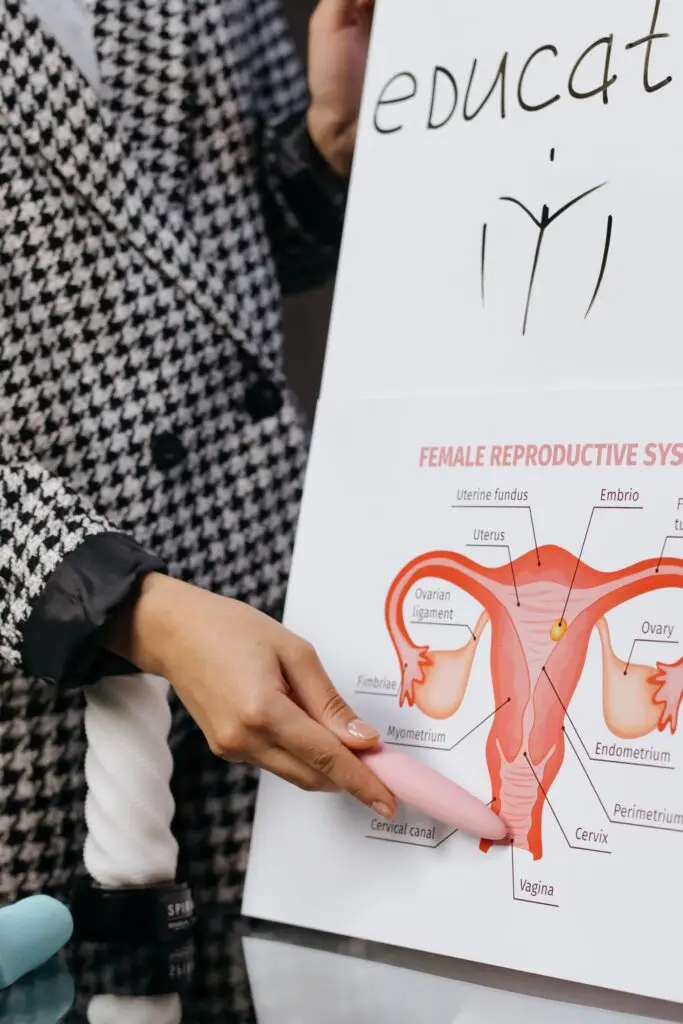
And yet, I have had to fight to understand what has been happening in my own body and not dismiss it as ‘normal’ or ok.
To take the time to realise how much my period was impacting on daily life; during my bleed phase (and throughout the cycle, if I’m honest).
For as long as I can remember, my periods have been painful. I don’t really remember a time when they weren’t.
As a teenager, I thought that was just what periods were. My mum had painful periods too.
People said periods hurt.
So I assumed I was unlucky, sensitive, or just one of those women who had “bad periods.”
Had I realised that these symptoms were, in fact, clear signs that my hormones were disrupted and that I was at risk of a chronic underlying condition; I’d like to think that I would have taken this much more seriously.
But,like many of us as teenagers – I was never taught what was normal and what needed further investigation.
When I was younger, I didn’t understand my menstrual cycle, or the signs of a period.
I didn’t know how to track my cycle or what signs showed I was ovulating.
I didn’t know that pain that stops you from functioning is not something you are supposed to just get through, with a hot water bottle and a handful of painkillers. Or, that heavy bleeding and low iron could have serious consequences on health and wellbeing.
For years, I lived with the pain of periods. And life stopped during these times.
Now, I know I had a debilitating condition that was progressing over time.
The condition is called adenomyosis (often named as endometriosis’ evil twin).
Adenomyosis is a condition where tissue similar to the lining of the uterus grows into the muscular wall of the uterus.
If you have edometriosis, it can be found all over the body. But, with adenomyosis – it’s confined to the uterus.
A hysterectomy is the only cure.
For me, it has meant years of progressively painful, heavy bleeds, pelvic pain, low iron, fatigue, ovulation pain and a slow erosion of energy that crept up over time. And a list of symptoms that you initially don’t attribute to your condition because you adapt over time.
Eventually, it lead to me adjusting what I did, because I didn’t have the energy, not always realising why.
I was building my life around bleeding, pain, fatigue, pain relief, managing iron and hoping the next cycle would’nt be as bad.
I was functioning, instead of thriving.
Over the years, I have tried so many things hoping to ‘heal’ my uterus.
Nutrition, supplements, iron support, cycle awareness, stress reduction, nervous system work, sleep, movement, acupuncture, naturopathy, pelvic health support, hormonal options, rest, heat, and more research than I can possibly summarise.
Some things helped for a while and I was able to better manage symptoms and slow the progression of the disease.
But, once I began perimenopause, the symptoms ramped up and I was no long able to manage them in a functional way.
I eventually reached a point where I had to admit something I had resisted for a long time:
I don’t have to live like this. And, I’m tired.
It has taken me years of ‘trying all the things’ to get to this point. In the end having chronically low iron and rising inflammation forced me to face the truth.
I need a hysterectomy.
Waiting until menopause is not an option because the diseased tissue continues to wreak havoc on your body putting you at risk of cancer due to the chronic inflammation.

A hysterectomy is never an easy decision for any woman because it’s not actually a ‘choice’.
For many women, by the time they have reached the point of seriously considering a hysterectomy; they’ve taken the long and difficult road to arrive at the decision to remove their uterus.
Most likely, they’ve already had countless invasive proceedures and surgeries, hoping to allievate their pain and suffering only to discover that they still need a hysterectomy anyway.
A hysterectomy is not a rare operation, it is actually one of the most common major surgeries performed on Australian women. Yet many women still feel underprepared for the decision, the recovery and the whole-body changes that can follow.
There can be a long recovery that is often not spoken about beyond the medical sign off at six weeks post op.
The operation impacts on a woman’s pelvis, hormones, nervous system, bowel, bladder, pelvic floor, sexuality, energy, identity and their emotional relationship with a deeply symbolic organ.
This decision carries grief as well as relief; two opposing emotions we have to hold at the same time, but often catch women by surprise. Particularly if they have been eagerly awaiting the surgery due to years of suffering.
In my case, my womb has grown and held my two beautiful babies. It has been part of my womanhood, my motherhood, my body and my story. And now I am preparing to say goodbye to it. Afterwards, I’ll be fundamentally different; both emotionally and physically.
Further complicated because adenomyosis and endometriosis are conditions where women can live for years without clear answers. Even when imaging strongly suggests it, the full confirmation often comes after the uterus is removed and examined which means that many women are making life-changing decisions while still carrying uncertainty.
Am I doing the right thing?
Have I tried enough?
What if surgery creates other problems?
What will happen to my pelvic floor?
Will sex feel different?
Will my hormones shift, even if I keep my ovaries?
How long will recovery really take?
It’s a major operation of a fundamental organ and it feels like a big deal.
What I continue to see in conversations, support groups and women’s stories, is that many women feel underinformed. This decision is often not given the time, depth and whole-body context it deserves by health professionals.
Women are given unrealistic recovery timelines and then become frustrated by their body’s healing process.
Surgeons perform this operation regularly and it’s familiar to them.
But woman have to live with the outcome.
And often, after six weeks, surgical care ends, even though real recovery may continue for months and years.
That is the gap I want to acknowledge and address through my own experience.
My work is about informed decision-making, body literacy, self advocacy and knowing what questions to ask.
And this is no different.
It is about understanding that a hysterectomy may end bleeding, but women still deserve support with recovery, pelvic floor rehabilitation, bowel care, hormones, emotional processing, sex, intimacy, fatigue, identity and the reality of healing.
Over the coming weeks and months, I’ll be sharing what I’m learning as I prepare for surgery and move through recovery, along with a FREE Hysterectomy Checklists to ensure women feel fully prepared.
Lived experience matters and women’s stories matter.
Because so many of us were taught to minimise pain, push through symptoms, accept exhaustion, and wait until things became unbearable before we were taken seriously.
I want something different for girls and woman.
For girls to be taught from the beginning that their bodies make sense and to know that heavy bleeding is not something they have to quietly manage forever.
I want hysterectomy conversations to include the whole woman; not just the uterus.
And I want women facing this decision to feel less alone, less ashamed, less rushed and more supported.
Women facing this outcome, shouldn’t feel alone, confused and underinformed.
Free Hysterectomy Guide
'Hysterectomy Preparation Checklists'
A practical, body-literate guide for women navigating adenomyosis, endometriosis, heavy bleeding, pelvic pain or hysterectomy decisions